
Global Ultra-Low-Power Microcontroller Market - Size and Forecast Analysis, 2021-2035
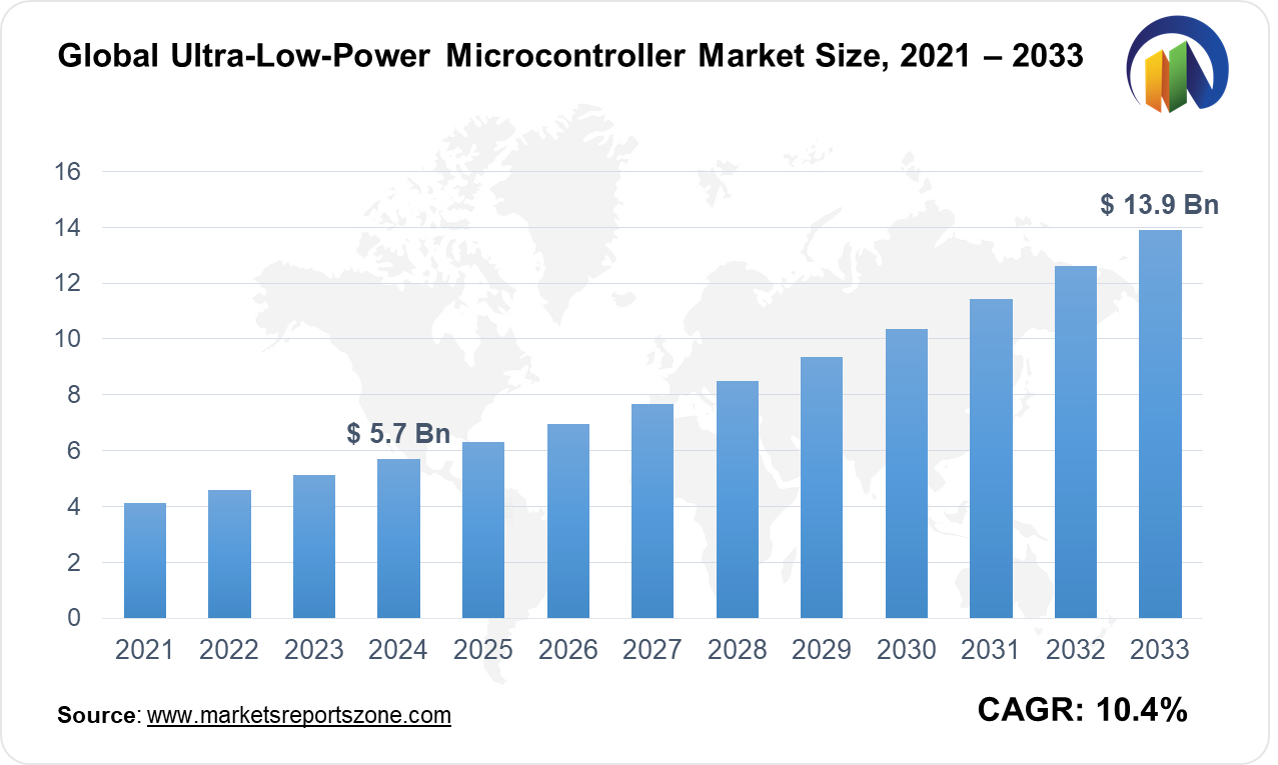
The Global Ultra-Low-Power Microcontroller Market was valued at USD 5.71 Billion in 2024 and is projected to reach USD 13.91 Billion by 2033 at a CAGR of around 10.4% between 2024 and 2033. The Global Ultra-Low-Power Microcontroller Market is driven by the increasing demand for energy-efficient solutions in consumer electronics and IoT devices. As the number of connected devices grows, the need for microcontrollers that consume minimal power while maintaining high performance has surged. This has been driven by industries such as automotive and healthcare, where energy efficiency is critical. Another key driver is the push towards sustainability, with governments and organizations focusing on reducing carbon footprints. However, a major restraint is the high initial cost of developing ultra-low-power microcontrollers. The complexity of designing such components with minimal power consumption often leads to higher manufacturing costs.
Despite this challenge, there are significant opportunities in the growing demand for wearable devices and smart home technologies. Companies are increasingly integrating ultra-low-power microcontrollers into products like fitness trackers and smart thermostats, improving battery life while maintaining functionality. Furthermore, the expansion of 5G networks presents an opportunity for ultra-low-power microcontrollers. As 5G devices require efficient processing capabilities with minimal energy use, the demand for these microcontrollers is expected to increase. In summary, while the cost of development poses challenges, the growing demand for energy-efficient devices and emerging technologies creates significant opportunities for market expansion.
Driver: Growing Demand for Energy-Efficient Devices
The demand for energy-efficient solutions in consumer electronics and IoT devices is rapidly driving the Global Ultra-Low-Power Microcontroller Market. As consumers and industries alike focus on reducing energy consumption, devices must operate longer with less power. For example, in the growing smart home sector, products like smart light bulbs, thermostats, and security cameras need to stay active and efficient for extended periods. Ultra-low-power microcontrollers make this possible by offering a balance of performance and minimal energy use. In wearables, such as fitness trackers, ultra-low-power microcontrollers are essential to ensure prolonged battery life while still supporting features like heart rate monitoring, GPS tracking, and notifications. Additionally, the automotive industry is incorporating these microcontrollers into electric vehicles (EVs) to optimize energy management.
They help manage systems like battery charging, infotainment, and HVAC without draining the battery. As electric cars continue to gain popularity, the demand for ultra-low-power microcontrollers is set to grow. Furthermore, the healthcare industry is adopting these microcontrollers in medical devices such as remote monitoring systems and insulin pumps, where efficient power consumption directly impacts the device's functionality and longevity. As more industries recognize the importance of energy efficiency, ultra-low-power microcontrollers are becoming a critical component in meeting these demands.
Key Insights:
- The adoption rate of ultra-low-power microcontrollers in wearable devices has reached 55% in the past two years, driven by the demand for extended battery life.
- Over USD 3 billion has been invested by companies in the development of ultra-low-power microcontroller technology, particularly for IoT, automotive, and consumer electronics sectors.
- More than 2 billion units of ultra-low-power microcontrollers were shipped globally in 2024, with a significant portion used in consumer electronics and industrial applications.
- The penetration rate of ultra-low-power microcontrollers in the automotive industry is approximately 30%, as electric vehicles and advanced driver-assistance systems (ADAS) require energy-efficient solutions.
- Government-funded projects focused on smart city developments and energy-efficient infrastructure have contributed to over USD 1 billion in investments for ultra-low-power technologies in the last year.
- The penetration rate of ultra-low-power microcontrollers in the healthcare sector has grown by 20% annually, with devices like wearable health monitors and insulin pumps leading the charge.
- More than 60% of new IoT devices released in 2024 are expected to integrate ultra-low-power microcontrollers to address growing concerns over energy efficiency.
- In the industrial sector, the adoption of ultra-low-power microcontrollers has reached 35%, as manufacturers focus on automation and the integration of energy-saving technologies.
Segment Analysis:
The Global Ultra-Low-Power Microcontroller Market is driven by various segments, including type, application, technology, and end-use industry. Among the types, 32-bit microcontrollers dominate, offering a balance between power efficiency and processing capability, commonly used in consumer electronics and industrial applications. 8-bit and 16-bit microcontrollers, while still relevant, are more suited for low-complexity tasks, found in simpler devices like home appliances and basic sensors. In terms of application, the industrial sector is a significant contributor, with ultra-low-power microcontrollers powering automation systems, robotics, and control systems. The automotive industry also heavily relies on these microcontrollers, especially in electric vehicles for energy management, battery optimization, and smart features.
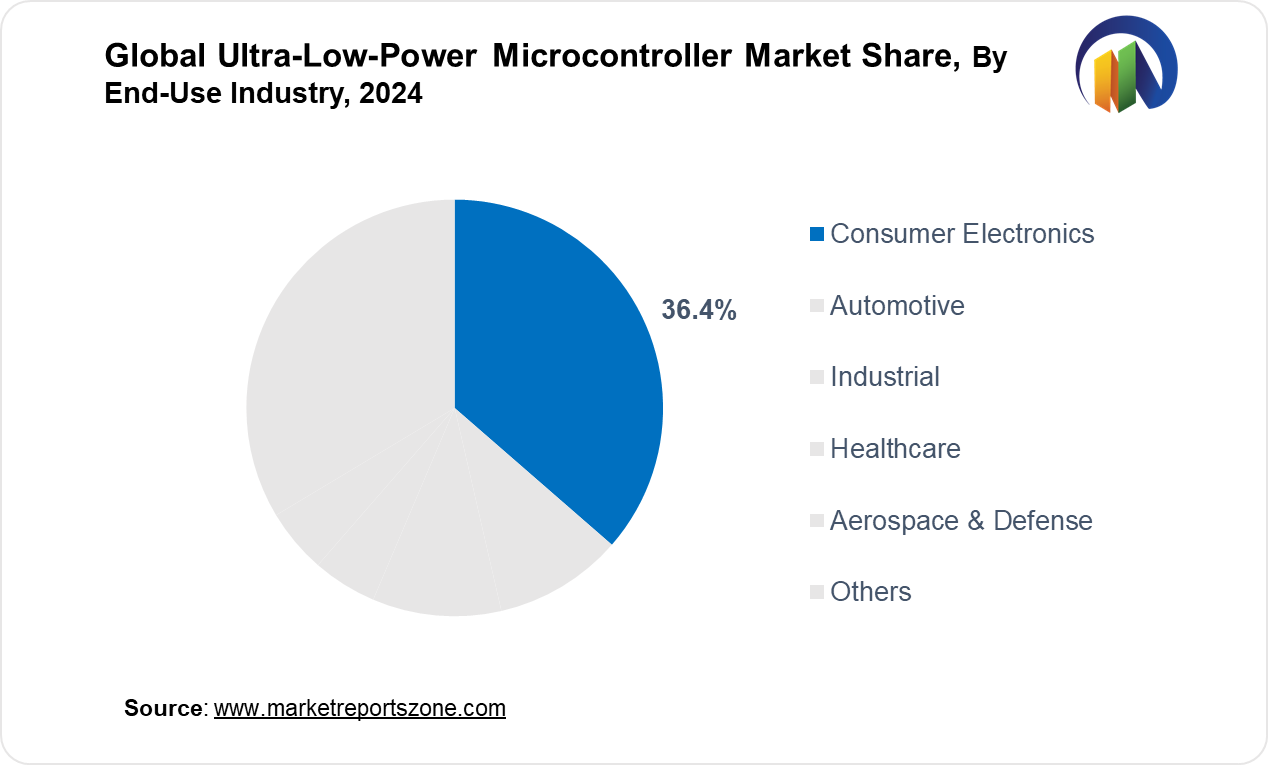
Healthcare applications, such as wearable health monitors, benefit from the long battery life provided by these microcontrollers. In the technology segment, CMOS technology remains the most widely used for its efficiency and cost-effectiveness in high-volume manufacturing, while FRAM technology is emerging for applications requiring faster data processing and lower energy consumption. Regarding end-use industries, consumer electronics remain the largest sector, where ultra-low-power microcontrollers are embedded in everything from smartphones to smart speakers. The aerospace and defense sector is also witnessing growth, using these microcontrollers in satellites, drones, and other high-tech equipment where reliability and efficiency are critical.
Regional Analysis:
The Global Ultra-Low-Power Microcontroller Market is witnessing diverse growth across all regions. In North America, the market is driven by the tech-heavy landscape, with companies like Apple and Tesla integrating ultra-low-power microcontrollers in products such as smartwatches and electric vehicles. The region's focus on smart cities and IoT development further fuels demand. Europe follows closely, with a strong emphasis on green technology and energy efficiency. Countries like Germany and Sweden are using these microcontrollers in electric vehicle charging stations and renewable energy applications. The Asia-Pacific region, particularly China and Japan, leads in manufacturing and electronics, driving widespread use in consumer electronics like smartphones, home appliances, and industrial automation systems. In the Middle East and Africa, rising investments in smart infrastructure, such as smart grids and energy-efficient buildings, are boosting demand for ultra-low-power solutions. Countries like the UAE are leading the charge with advancements in smart city projects. Meanwhile, Latin America is gradually adopting these technologies, especially in Brazil, where the automotive industry is embracing ultra-low-power microcontrollers for electric vehicles and energy-efficient devices. As these regions continue to invest in digital transformation and sustainable technologies, the demand for ultra-low-power microcontrollers will likely keep growing, offering vast opportunities in multiple industries.
Competitive Scenario:
The Global Ultra-Low-Power Microcontroller Market is being shaped by leading companies with innovative solutions. Ambiq Micro, Inc. is making strides with its low-power technologies, particularly with their Apollo series, catering to the wearable and IoT markets. Analog Devices, Inc. and Microchip Technology continue to push boundaries with advanced microcontrollers for automotive and industrial applications, focusing on performance while minimizing energy consumption. Holtek Semiconductor Inc. has expanded its portfolio, offering microcontrollers tailored for consumer electronics and smart home devices. Infineon Technologies AG and Nordic Semiconductor ASA are focusing on wireless communication, integrating ultra-low-power microcontrollers in applications like Bluetooth Low Energy (BLE) for devices such as fitness trackers and medical equipment. Nuvoton Technology Corporation and NXP Semiconductors N.V. are improving microcontroller integration for automotive and industrial automation systems, ensuring energy efficiency without compromising functionality. Panasonic Corporation and Renesas Electronics Corporation continue to innovate in the IoT and home appliance sectors, creating solutions for long-lasting battery life in everyday devices. Companies like ROHM Co., Ltd., Seiko Epson Corporation, and Silicon Laboratories, Inc. are expanding their reach into the wearable and healthcare markets, while STMicroelectronics N.V. and Texas Instruments Incorporated are focusing on energy-efficient solutions for aerospace and defense applications. Toshiba Electronic Devices & Storage Corporation is also investing in low-power microcontrollers to support the automotive sector’s shift to electric vehicles.
Ultra-Low-Power Microcontroller Market Report Scope
| Report Attribute | Details |
|---|---|
| Market Size Value in 2024 | USD 5.71 Billion |
| Revenue Forecast in 2033 | USD 13.91 Billion |
| Growth Rate | CAGR of 10.4% from 2025 to 2033 |
| Historic Period | 2021 - 2024 |
| Forecasted Period | 2025 - 2033 |
| Report Coverage | Revenue forecast, company ranking, competitive landscape, growth factors, and trends |
| Regions Covered | North America; Europe; Asia Pacific; Latin America; Middle East & Africa |
| Countries Covered | U.S.; Canada; Mexico, UK; Germany; France; Spain; Italy; Russia; China; Japan; India; South Korea; Australia; Southeast Asia; Brazil; Argentina; Saudi Arabia; UAE; South Africa |
| Key companies profiled | Ambiq Micro, Inc.; Analog Devices, Inc.; Microchip Technology; Holtek Semiconductor Inc.; Infineon Technologies AG; Nordic Semiconductor ASA; Nuvoton Technology Corporation; NXP Semiconductors N.V.; Panasonic Corporation; Renesas Electronics Corporation; ROHM Co., Ltd.; Seiko Epson Corporation; Silicon Laboratories, Inc.; STMicroelectronics N.V.; Texas Instruments Incorporated; Toshiba Electronic Devices & Storage Corporation; Others |
| Customization | Free report customization (equivalent up to 8 analysts working days) with purchase. Addition or alteration to country, regional & segment scope. |
The Global Ultra-Low-Power Microcontroller Market report is segmented as follows:
By Type,
- 8-bit
- 16-bit
- 32-bit
- Others
By Application,
- Industrial
- Manufacturing
- Automotive
- Healthcare
- Consumer Electronics
- Home Appliances
- Others
By Technology,
- CMOS Technology
- FRAM Technology
- Others
By End-Use Industry,
- Consumer Electronics
- Automotive
- Industrial
- Healthcare
- Aerospace & Defense
- Others
By Region,
- North America
- U.S.
- Canada
- Mexico
- Europe
- UK
- Germany
- France
- Spain
- Italy
- Russia
- Rest of Europe
- Asia Pacific
- China
- Japan
- India
- South Korea
- Australia
- Southeast Asia
- Rest of Asia Pacific
- Latin America
- Brazil
- Argentina
- Rest of Latin America
- Middle East & Africa
- Saudi Arabia
- UAE
- South Africa
- Rest of Middle East & Africa
Key Market Players,
- Ambiq Micro, Inc.
- Analog Devices, Inc.
- Microchip Technology
- Holtek Semiconductor Inc.
- Infineon Technologies AG
- Nordic Semiconductor ASA
- Nuvoton Technology Corporation
- NXP Semiconductors N.V.
- Panasonic Corporation
- Renesas Electronics Corporation
- ROHM Co., Ltd.
- Seiko Epson Corporation
- Silicon Laboratories, Inc.
- STMicroelectronics N.V.
- Texas Instruments Incorporated
- Toshiba Electronic Devices & Storage Corporation
- Others
Frequently Asked Questions
How big is the Ultra-Low-Power Microcontroller market?
The Global Ultra-Low-Power Microcontroller Market was valued at USD 5.71 Billion in 2024 and is projected to reach USD 13.91 Billion by 2033.
What is the Ultra-Low-Power Microcontroller market growth?
The Global Ultra-Low-Power Microcontroller Market is expected to grow at a compounded annual growth rate of 10.4% between 2024 and 2033.
Which region has the largest market share in Ultra-Low-Power Microcontroller market?
The Asia Pacific holds the largest market share in the global Ultra-Low-Power Microcontroller Market in 2024.
Who are the key players in Ultra-Low-Power Microcontroller market?
Key players profiled in the global Ultra-Low-Power Microcontroller market are Ambiq Micro, Inc.; Analog Devices, Inc.; Microchip Technology; Holtek Semiconductor Inc.; Infineon Technologies AG; Nordic Semiconductor ASA; Nuvoton Technology Corporation; NXP Semiconductors N.V.; Panasonic Corporation; Renesas Electronics Corporation; ROHM Co., Ltd.; Seiko Epson Corporation; Silicon Laboratories, Inc.; STMicroelectronics N.V.; Texas Instruments Incorporated; Toshiba Electronic Devices & Storage Corporation; Others.