
Global Organic Baby Toiletries Market - Size and Forecast Analysis, 2021-2035
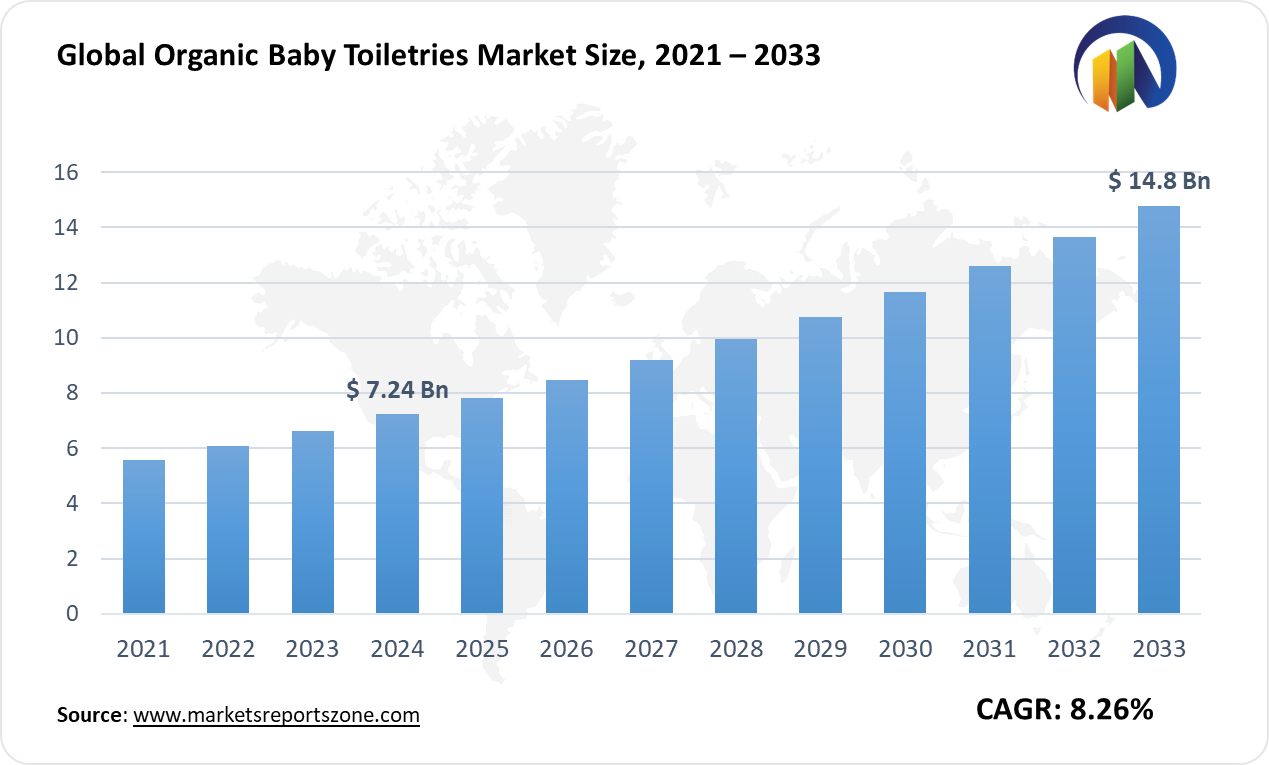
The Global Organic Baby Toiletries Market was valued at USD 7.24 Billion in 2024 and is projected to reach USD 14.79 Billion by 2033 at a CAGR of around 8.26% between 2024 and 2033. The Global Organic Baby Toiletries Market is driven by increasing awareness of baby health and rising demand for chemical-free products. Parents prefer organic baby shampoos and lotions to avoid skin allergies. Natural ingredients like aloe vera and chamomile are widely used. The growing trend of sustainable packaging also boosts demand. Biodegradable wipes and refillable baby wash bottles are gaining popularity. However, high costs restrain market growth. Organic products are often priced higher than conventional alternatives. This limits affordability for many consumers. Despite this, significant opportunities exist. The expansion of e-commerce platforms provides better accessibility.
Parents can easily find organic baby toiletries online, with doorstep delivery options. Another major opportunity lies in product innovations. Companies are introducing multipurpose organic baby products. Shampoo-conditioner blends and all-in-one body washes simplify baby care routines. The market is evolving with eco-friendly certifications and cruelty-free labels. Baby care brands collaborate with dermatologists to develop safer formulas. Demand is rising for fragrance-free and hypoallergenic organic toiletries. Emerging brands focus on locally sourced organic ingredients. Influencer marketing and social media campaigns increase consumer engagement. As sustainability concerns grow, organic baby toiletries continue to gain traction. The market is set for steady expansion in the coming years.
Driver: Rising Demand for Chemical-Free Care
Parents are becoming more conscious of the ingredients in baby toiletries. The demand for organic, chemical-free products is increasing due to concerns over skin allergies and long-term health effects. Harsh chemicals like parabens, sulfates, and artificial fragrances are avoided. Instead, brands focus on natural ingredients like shea butter, coconut oil, and oat extracts. Organic baby lotions with plant-based moisturizers protect delicate skin. Baby powders made with cornstarch replace talc-based alternatives. Major baby care brands are launching certified organic product lines. Small businesses are also entering the market with handmade, preservative-free options. Hospitals and maternity clinics recommend organic toiletries for newborns.
Parents prefer baby wipes free from alcohol and synthetic fragrances. Sensitive skin formulas gain popularity, ensuring safety for infants with eczema or allergies. Organic diaper creams with zinc oxide and calendula are widely used. The shift towards non-toxic baby care extends to bath essentials. Organic baby shampoos with tear-free, sulfate-free formulas are in high demand. Online platforms promote transparency by listing all ingredients in detail. Social media influencers raise awareness about safe baby care choices. As awareness spreads, organic baby toiletries are becoming a trusted choice for modern parents prioritizing health and safety.
Key Insights:
- Over 70% of parents prefer organic baby toiletries over conventional alternatives due to safety concerns.
- Leading baby care brands have invested over $500 million in R&D to develop certified organic and hypoallergenic products.
- Organic baby wipes account for more than 60% of total baby wipes sales, driven by demand for biodegradable options.
- Over 80% of hospitals and maternity clinics recommend organic baby skincare products for newborns with sensitive skin.
- More than 50 million units of organic baby shampoos and lotions are sold annually, reflecting rising consumer trust.
- The penetration of organic baby toiletries in urban markets exceeds 65%, fueled by increasing disposable incomes and awareness.
- Government incentives for organic product manufacturing have exceeded $1 billion, supporting sustainability initiatives in baby care.
- Organic baby diaper creams with plant-based ingredients have seen a 40% rise in sales, as parents seek chemical-free alternatives.
Segment Analysis:
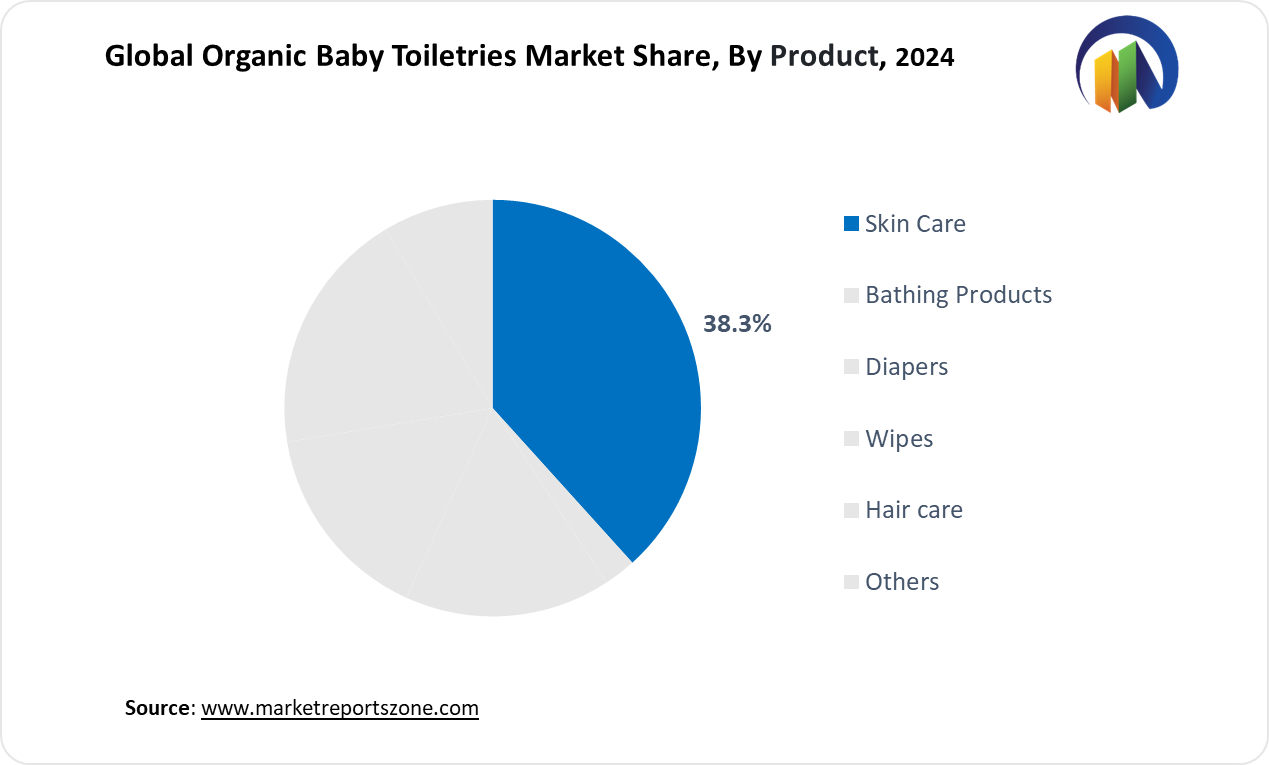
The organic baby toiletries market is expanding across various product categories and distribution channels. By product, skin care remains a key segment, with organic baby creams and lotions gaining popularity for treating dryness and rashes. Parents prefer plant-based balms for diaper rash relief. Bathing products such as tear-free organic baby washes and soaps are in demand, made with oatmeal and coconut extracts for gentle cleansing. Diapers made from biodegradable bamboo fibers are replacing traditional options, offering sustainability and comfort. Wipes infused with aloe vera and chamomile provide chemical-free cleansing for babies' sensitive skin. Hair care products, including organic baby shampoos and detangling sprays, ensure soft and healthy hair without sulfates or artificial fragrances.
By distribution channel, supermarkets and hypermarkets continue to be a preferred choice, allowing parents to physically check product labels. Specialty stores cater to eco-conscious buyers, offering a wide selection of certified organic brands. Online platforms drive sales with doorstep delivery and detailed ingredient transparency. Subscription-based models for organic baby toiletries are becoming popular. Social media promotions and influencer endorsements increase awareness. As demand grows, brands focus on ethical sourcing, cruelty-free formulations, and innovative, multipurpose baby care products for convenience and sustainability.
Regional Analysis:
The organic baby toiletries market is witnessing strong growth across all major regions, driven by increasing awareness and changing consumer preferences. In North America, demand for organic baby products is fueled by parents prioritizing non-toxic, dermatologist-approved formulas. Retail giants are expanding their organic baby care sections, and organic diaper subscriptions are gaining traction. In Europe, strict regulations on baby care products encourage the use of certified organic ingredients. Eco-friendly baby wipes made from biodegradable materials are becoming standard in nurseries and daycare centers.
Asia-Pacific is experiencing rapid adoption, with rising disposable incomes and growing trust in organic baby skincare. Countries like Japan and South Korea are introducing fermented plant-based baby lotions, inspired by traditional herbal remedies. In Latin America, the market is driven by increasing availability through e-commerce. Locally sourced organic baby oils made from avocado and cocoa butter are gaining popularity. In the Middle East & Africa, demand is growing for fragrance-free and halal-certified baby toiletries. Organic baby powders made with cornstarch instead of talc are widely preferred. As global awareness of baby health and sustainability increases, organic baby toiletries continue to gain acceptance, making them a vital part of modern parenting across all regions.
Competition Landscape:
Leading companies in the organic baby toiletries market are expanding product lines and adopting sustainable practices to meet growing consumer demand. Earth Mama and California Baby focus on plant-based skincare, launching organic baby sunscreens free from synthetic chemicals. Nature’s Baby Organics and The Honest Company introduce fragrance-free baby lotions infused with coconut and shea butter, catering to sensitive skin. Green People develops biodegradable baby wipes and refillable shampoo bottles, reducing plastic waste. Burt's Bees Baby expands its range of certified organic diaper creams, offering eco-friendly alternatives with beeswax and zinc oxide. LittleTwig and Erbaviva create herbal-infused bath products, using chamomile and calendula for soothing effects.
Babyganics enhances its organic baby detergent line, ensuring chemical-free fabric care for newborns. Charlie Banana strengthens its position in sustainable baby care by launching organic cotton reusable diapers with adjustable fits. Brands are increasingly partnering with pediatricians to develop dermatologist-tested formulas. Subscription-based services for organic baby toiletries gain traction, offering convenience to parents. Companies leverage e-commerce platforms for direct consumer engagement, providing ingredient transparency and product education. As sustainability and safety become top priorities, organic baby care brands continue innovating, ensuring gentle yet effective solutions for modern parenting needs.
Organic Baby Toiletries Market Report Scope
| Report Attribute | Details |
|---|---|
| Market Size Value in 2024 | USD 7.24 Billion |
| Revenue Forecast in 2033 | USD 14.79 Billion |
| Growth Rate | CAGR of 8.26% from 2025 to 2033 |
| Historic Period | 2021 - 2024 |
| Forecasted Period | 2025 - 2033 |
| Report Coverage | Revenue forecast, company ranking, competitive landscape, growth factors, and trends |
| Regions Covered | North America; Europe; Asia Pacific; Latin America; Middle East & Africa |
| Countries Covered | U.S.; Canada; Mexico, UK; Germany; France; Spain; Italy; Russia; China; Japan; India; South Korea; Australia; Southeast Asia; Brazil; Argentina; Saudi Arabia; UAE; South Africa |
| Key companies profiled | Earth Mama; California Baby; Nature’s Baby Organics; The Honest Company, Inc.; Green People; Burt's Bees Baby; LittleTwig; Erbaviva; Babyganics; Charlie Banana; Others |
| Customization | Free report customization (equivalent up to 8 analysts working days) with purchase. Addition or alteration to country, regional & segment scope. |
The Global Organic Baby Toiletries Market report is segmented as follows:
By Product,
- Skin Care
- Bathing Products
- Diapers
- Wipes
- Hair care
- Others
By Distribution Channel,
- Supermarkets & Hypermarkets
- Specialty Stores
- Online
- Others
By Region,
- North America
- U.S.
- Canada
- Mexico
- Europe
- UK
- Germany
- France
- Spain
- Italy
- Russia
- Rest of Europe
- Asia Pacific
- China
- Japan
- India
- South Korea
- Australia
- Southeast Asia
- Rest of Asia Pacific
- Latin America
- Brazil
- Argentina
- Rest of Latin America
- Middle East & Africa
- Saudi Arabia
- UAE
- South Africa
- Rest of Middle East & Africa
Key Market Players,
- Earth Mama
- California Baby
- Nature’s Baby Organics
- The Honest Company, Inc.
- Green People
- Burt's Bees Baby
- LittleTwig
- Erbaviva
- Babyganics
- Charlie Banana
- Others
Frequently Asked Questions
How big is the Organic Baby Toiletries market?
The Global Organic Baby Toiletries Market was valued at USD 7.24 Billion in 2024 and is projected to reach USD 14.79 Billion by 2033.
What is the Organic Baby Toiletries market growth?
The Global Organic Baby Toiletries Market is expected to grow at a compounded annual growth rate of 8.26% between 2024 and 2033.
Which region has the largest market share in Organic Baby Toiletries market?
The North America holds the largest market share in the global Organic Baby Toiletries Market in 2024.
Who are the key players in Organic Baby Toiletries market?
Key players profiled in the global Organic Baby Toiletries market are Earth Mama; California Baby; Nature’s Baby Organics; The Honest Company, Inc.; Green People; Burt's Bees Baby; LittleTwig; Erbaviva; Babyganics; Charlie Banana; Others.