
Global Kidney Fibrosis Treatment Market - Size and Forecast Analysis, 2021-2035
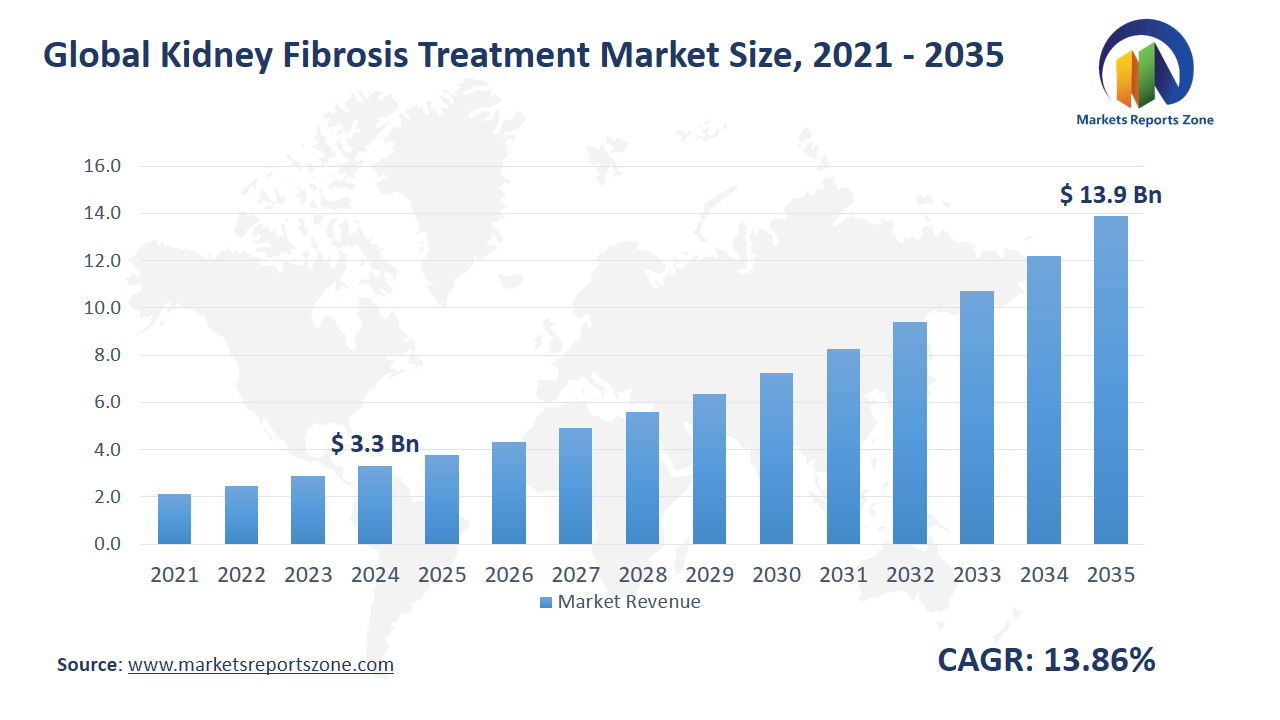
Global Kidney Fibrosis Treatment Market Size is expected to reach USD 13.89 Billion by 2035 from USD 3.33 Billion in 2024, with a CAGR of around 13.86% between 2024 and 2035. The global kidney fibrosis treatment market is being driven by increasing prevalence of chronic kidney diseases and rising aging population. Growing cases of diabetes and hypertension have also contributed to higher demand for effective kidney fibrosis therapies. Strong investment in R&D by pharmaceutical companies has been encouraged due to unmet clinical needs. However, market growth has been restrained by high treatment costs and limited availability of advanced therapies in low-income regions. Many patients have been left untreated due to financial and accessibility barriers. Despite these challenges, promising opportunities have been created through advancements in regenerative medicine and stem cell therapies. New drug approvals targeting fibrosis-related pathways are being awaited by healthcare providers and patients alike. Personalized medicine approaches have also been explored, aiming to improve treatment outcomes and minimize side effects. In real life, early-stage diagnosis through AI-based imaging tools has been implemented in select hospitals. For example, non-invasive imaging methods have been tested to detect fibrotic progression in diabetic patients. Additionally, partnerships between biotech firms and nephrology clinics have been formed to trial novel therapies in urban areas. With rising awareness and patient-centric care models, market expansion is expected. The focus has been shifted towards long-term disease management and prevention.
Driver: Aging Population Fuels Treatment Demand
The rising aging population has played a crucial role in driving the demand for kidney fibrosis treatment. With age, kidney function tends to decline naturally, increasing vulnerability to chronic kidney conditions. Elderly individuals often face coexisting health issues such as diabetes, hypertension, or cardiovascular diseases, which are leading contributors to kidney fibrosis. As life expectancy improves globally, more seniors are living longer with chronic conditions that require ongoing care. Because of this, the need for early diagnosis, effective treatment, and long-term disease management has intensified. In real life, specialized geriatric nephrology clinics have been set up in cities like Tokyo and Berlin to cater exclusively to aging patients with kidney-related complications. Mobile health units equipped with portable diagnostic tools have also been deployed in remote elderly communities to screen for kidney fibrosis symptoms. Additionally, elderly care homes in developed countries have partnered with local hospitals to provide in-house kidney health monitoring and treatment access. These proactive steps have led to earlier interventions and improved quality of life for older patients. As more governments recognize the burden of age-related kidney diseases, healthcare policies are being tailored to address this demographic shift. The trend has reshaped treatment strategies, placing greater focus on preventative and supportive care for seniors.
Key Insights:
- The adoption rate of kidney fibrosis treatments, particularly angiotensin-converting enzyme (ACE) inhibitors, is approximately 29% among patients with chronic kidney disease (CKD).
- In 2024, the U.S. government allocated $30 million towards research and development efforts focused on advanced therapies for kidney fibrosis.
- The National Kidney Foundation's Innovation Fund has invested in multiple early-stage companies developing transformative kidney disease treatments, including those targeting kidney fibrosis.
- The penetration rate of hospital-based treatments for kidney fibrosis is estimated to be 61.4%, reflecting the dominance of hospitals in managing severe cases.
- Approximately 37 million Americans are affected by CKD, many of whom are at risk of developing kidney fibrosis, highlighting the critical need for effective treatment options.
- Pharmaceutical companies have collectively invested over $500 million in developing anti-fibrotic drugs and gene therapies for kidney fibrosis over the past three years.
- By the end of 2024, it is estimated that over 10,000 patients globally will have participated in clinical trials for novel kidney fibrosis therapies.
- Innovations such as CRISPR/Cas9 gene editing and targeted molecular therapies have shown promising results in preclinical models, driving further investment and adoption in the market.
Segment Analysis:
The kidney fibrosis treatment market has been segmented by both type and application, offering a diverse landscape of therapeutic approaches. Among treatment types, Angiotensin Converting Enzyme (ACE) inhibitors and Angiotensin II Receptor Blockers (ARBs) have been widely prescribed to manage blood pressure and reduce proteinuria, helping to slow fibrosis progression. Renin inhibitors and vasopeptidase inhibitors have been used in cases requiring more targeted suppression of the renin-angiotensin system. Pirfenidone, originally developed for pulmonary fibrosis, has shown potential in renal fibrosis and is being explored in clinical settings. On the application front, chronic kidney diseases remain the primary focus, with treatments tailored to managing inflammation and slowing scarring. Kidney cancer treatment, while a smaller segment, has attracted attention with the emergence of fibrosis-targeted therapies used as adjuncts to existing cancer drugs. In real life, nephrology units in hospitals across Scandinavia have implemented ACE inhibitors as first-line defense in early-stage chronic kidney disease. Clinical trials in private Indian hospitals have investigated Pirfenidone’s effects on renal tissue health. In cancer-specialized centers in the U.S., ARBs have been integrated into post-surgical treatment plans to support renal recovery. These segmented approaches have allowed physicians to offer more personalized, disease-specific care, ultimately improving patient outcomes and long-term renal health.
Regional Analysis:
The kidney fibrosis treatment market has shown varied growth patterns across key regions—North America, Europe, Asia-Pacific, Latin America, and the Middle East & Africa—driven by distinct healthcare dynamics. In North America, high awareness, strong healthcare infrastructure, and advanced clinical research have boosted early adoption of novel therapies. For example, kidney health outreach programs have been conducted in underserved U.S. communities to promote early screening. In Europe, a focus on public health and regulatory support has encouraged the integration of fibrosis treatments into national care guidelines. Hospitals in Germany and France have introduced patient education campaigns on managing fibrosis-related complications. Asia-Pacific has emerged as a fast-growing region due to rising chronic disease rates and increasing investment in healthcare. In China and South Korea, collaborations between biotech startups and teaching hospitals have been formed to trial new kidney therapies. Latin America has shown steady progress, especially in urban areas where private clinics are expanding access to ACE inhibitors and diagnostic tools. In Brazil, mobile nephrology units have reached rural populations for initial fibrosis screening. The Middle East & Africa region faces infrastructure challenges, but governments have started investing in dialysis centers and awareness programs. In countries like the UAE, public-private partnerships are supporting specialized renal care units.
Competitive Scenario:
The kidney fibrosis treatment market has been actively shaped by several key players through strategic initiatives and product developments. Merck & Co. has intensified its research efforts, focusing on novel antifibrotic compounds to address unmet needs in renal care. Pfizer Inc. has expanded its pipeline by exploring combination therapies aimed at enhancing treatment efficacy. F. Hoffmann-La Roche has strengthened its position by acquiring Promedior, a company specializing in fibrosis-focused therapeutics, thereby enriching its portfolio with advanced biologics. InterMune Inc. continues to contribute through its expertise in antifibrotic agents, supporting ongoing clinical trials. Galectin Therapeutics has progressed with its galectin-3 inhibitor, aiming to halt fibrosis progression in patients with chronic kidney conditions. La Jolla Pharmaceutical Company has been developing innovative treatments targeting renal hemodynamics to improve patient outcomes. ProMetic Life-Sciences Inc. has advanced its lead candidate, PBI-4050, demonstrating potential in reducing fibrotic tissue in preclinical studies. BioLine Rx has initiated clinical evaluations of its novel compounds designed to mitigate renal fibrosis. Genzyme Corporation, under Sanofi, has been conducting trials on fresolimumab, an antibody targeting TGF-beta, a key mediator in fibrosis. Collectively, these companies are contributing to a dynamic and evolving landscape in kidney fibrosis treatment, striving to bring more effective therapies to patients worldwide.
Kidney Fibrosis Treatment Market Report Scope
| Report Attribute | Details |
|---|---|
| Market Size Value in 2024 | USD 3.33 Billion |
| Revenue Forecast in 2035 | USD 13.89 Billion |
| Growth Rate | CAGR of 13.86% from 2025 to 2035 |
| Historic Period | 2021 - 2024 |
| Forecasted Period | 2025 - 2035 |
| Report Coverage | Revenue forecast, company ranking, competitive landscape, growth factors, and trends |
| Regions Covered | North America; Europe; Asia Pacific; Latin America; Middle East & Africa |
| Countries Covered | U.S.; Canada; Mexico, UK; Germany; France; Spain; Italy; Russia; China; Japan; India; South Korea; Australia; Southeast Asia; Brazil; Argentina; Saudi Arabia; UAE; South Africa |
| Key companies profiled | Merck & Co(US); Pfizer Inc(US); F. Hoffman-La Roche(Switzerland); InterMune Inc(US); Galectin Therapeutics(US); La Jolla Pharmaceutical Company(US); ProMetic Life-Sciences Inc(Canada); BioLine Rx(Israel); Genzyme Corporation(US) |
| Customization | Free report customization (equivalent up to 8 analysts working days) with purchase. Addition or alteration to country, regional & segment scope. |
The Global Kidney Fibrosis Treatment Market report is segmented as follows:
By Type,
- Angiotensin Converting Enzyme (ACE) Inhibitors
- Pirfenidone
- Renin Inhibitors
- Angiotensin II Receptor Blockers (ARBs)
- Vasopeptidase Inhibitors
By Application,
- Chronic Kidney Diseases
- Kidney Cancer Treatment
By Region,
- North America
- U.S.
- Canada
- Mexico
- Europe
- UK
- Germany
- France
- Spain
- Italy
- Russia
- Rest of Europe
- Asia Pacific
- China
- Japan
- India
- South Korea
- Australia
- Southeast Asia
- Rest of Asia Pacific
- Latin America
- Brazil
- Argentina
- Rest of Latin America
- Middle East & Africa
- Saudi Arabia
- UAE
- South Africa
- Rest of Middle East and Africa
Key Market Players,
- Merck & Co(US)
- Pfizer Inc(US)
- F. Hoffman-La Roche(Switzerland)
- InterMune Inc(US)
- Galectin Therapeutics(US)
- La Jolla Pharmaceutical Company(US)
- ProMetic Life-Sciences Inc(Canada)
- BioLine Rx(Israel)
- Genzyme Corporation(US)
Frequently Asked Questions
How big is the Kidney Fibrosis Treatment market?
Global Kidney Fibrosis Treatment Market Size was valued at USD 3.33 Billion in 2024 and is projected to reach at USD 13.89 Billion in 2035.
What is the Kidney Fibrosis Treatment market growth?
Global Kidney Fibrosis Treatment Market is expected to grow at a CAGR of around 13.86% during the forecasted year.
Which region has the largest market share in Kidney Fibrosis Treatment market?
North America, Asia Pacific and Europe are major regions in the global Kidney Fibrosis Treatment Market.
Who are the key players in Kidney Fibrosis Treatment market?
Key players analyzed in the global Kidney Fibrosis Treatment Market are Merck & Co(US); Pfizer Inc(US); F. Hoffman-La Roche(Switzerland); InterMune Inc(US); Galectin Therapeutics(US); La Jolla Pharmaceutical Company(US); ProMetic Life-Sciences Inc(Canada); BioLine Rx(Israel); Genzyme Corporation(US) and so on.