
Global Antimicrobial Gel Market - Size and Forecast Analysis, 2021-2035
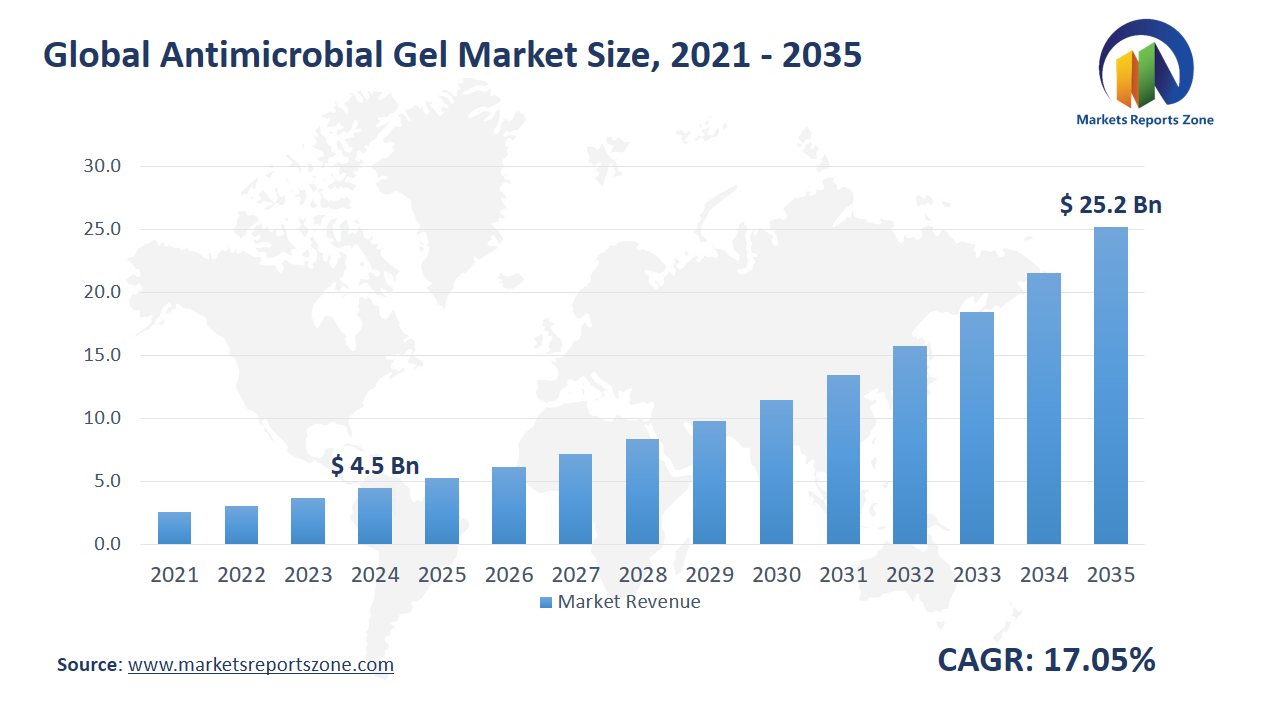
Global Antimicrobial Gel Market Size is expected to reach USD 25.21 Billion by 2035 from USD 4.46 Billion in 2024, with a CAGR of around 17.05% between 2024 and 2035. The global antimicrobial gel market is being driven by increased awareness of hygiene and the rise in infectious diseases. The COVID-19 pandemic significantly boosted the demand for antimicrobial gels, as people began using hand sanitizers more frequently in public places. Health-conscious consumers have also made personal hygiene a priority, especially in urban areas. However, concerns about skin irritation and dryness have been considered a restraint. Many people have reported discomfort after using antimicrobial gels regularly, leading to reduced use. Despite this, there are two key opportunities in the market. First, the growing adoption of antimicrobial gels in healthcare settings presents a strong opportunity. Hospitals and clinics are increasingly using these gels to prevent the spread of infections. For example, healthcare workers are using them during patient care, reducing the risk of hospital-acquired infections. Second, the demand for eco-friendly and skin-friendly gels has been rising. Consumers are opting for products with natural ingredients and biodegradable packaging. In regions like Europe, there has been a shift toward using antimicrobial gels with organic and sustainable components. These opportunities align with the broader trends of health, sustainability, and the global fight against infectious diseases.
Driver: Hygiene Awareness Drives Market Growth
The surge in hygiene awareness has played a significant role in the growth of the antimicrobial gel market. Over the past few years, especially with the pandemic, hygiene practices have become more ingrained in daily life. People are now more cautious about germs and the spread of infectious diseases. For example, in schools, teachers encourage children to use hand sanitizers before meals and after recess. Similarly, many businesses have installed sanitizing stations at their entrances, encouraging employees and customers to sanitize hands frequently. In high-traffic areas such as shopping malls and airports, antimicrobial gel dispensers have been installed at every corner, ensuring the constant use of sanitizers. Furthermore, many individuals now carry small bottles of hand sanitizers in their bags, using them regularly on public transportation, in cafes, or even when touching shopping carts. The rise in travel-related hygiene concerns has also contributed, with travelers becoming more conscious of germs while on planes or in hotels. As a result, consumers are seeking antimicrobial gels that offer effective protection without causing skin irritation. The push for cleanliness in public spaces and personal routines has cemented the importance of antimicrobial gels, making them an essential part of everyday hygiene practices.
Key Insights:
- In 2023, the U.S. government invested $197 million in antimicrobial resistance initiatives, supporting research and prevention programs relevant to antimicrobial gels.
- Over 2.8 million antimicrobial-resistant infections occur annually in the U.S., increasing demand for antimicrobial gel products in healthcare settings.
- Germany reported that about 1% of its population suffered from venous leg ulcers in 2018, with antibacterial wound gels routinely used in chronic wound care.
- The adoption rate of antimicrobial wound dressings for chronic wounds is highest among patients over 60, reaching 3.9% in Germany.
- In India, approximately one million people experience moderate to severe burns each year, driving significant use of antimicrobial gels in burn management.
- Major healthcare companies such as 3M, Smith & Nephew, and B. Braun SE are key suppliers of antimicrobial gels, with ongoing investments in product innovation and distribution.
Segment Analysis:
The antimicrobial gel market is divided into silver and iodine-based gels, with both offering unique benefits for different applications. Silver antimicrobial gels are known for their strong antimicrobial properties and are commonly used in hospitals to treat wounds and prevent infection. They are frequently applied to burn victims or patients with chronic wounds, as silver ions are effective in killing a broad spectrum of bacteria. In contrast, iodine antimicrobial gels are typically used for more intensive disinfection and are often applied in surgical settings to sterilize the skin before procedures. These gels are also used in home settings, particularly for minor cuts, scrapes, or abrasions, where a higher level of infection prevention is necessary. In terms of application, home use remains a significant part of the market. Families often keep antimicrobial gels on hand for quick hygiene during the cold and flu season. Small dispensers are common in kitchens, bathrooms, and first aid kits. Hospital use, on the other hand, is seeing increased demand, especially in intensive care units and emergency rooms, where infection control is critical. Real-life examples include burn patients in hospitals using silver gels for wound care, while at home, parents use iodine-based gels to clean their children’s minor wounds after outdoor activities.
Regional Analysis:
The antimicrobial gel market shows varied trends across different regions, shaped by factors such as healthcare infrastructure, hygiene awareness, and environmental conditions. In North America, the focus on personal hygiene and infection prevention has led to widespread use of antimicrobial gels in both healthcare settings and households. Many businesses, such as gyms and offices, provide these gels at entry points. In Europe, hospitals and clinics are seeing a steady demand for iodine-based gels, especially in surgical environments. At the same time, home use is prominent, with families using silver gels for minor wounds and skin irritations. Asia-Pacific faces a higher demand for antimicrobial gels due to population density and pollution, particularly in countries like China and India. In urban areas, antimicrobial gels are used in schools, offices, and public transport to combat air-borne diseases. Latin America has witnessed growing adoption of these gels, especially in countries like Brazil, where healthcare access in rural areas is still improving. In Africa, while antimicrobial gel use is more limited, there’s a rising awareness of hygiene in urban centers, driven by both government initiatives and NGO programs. For example, hospitals in Kenya and Nigeria have started using antimicrobial gels to reduce the spread of infections in clinics and healthcare centers.
Competitive Scenario:
The antimicrobial gel market is experiencing significant growth, driven by advancements in wound care and increased demand for infection prevention. Companies like Medline Industries and MPM Medical are expanding their product lines to include silver and iodine-based gels, catering to both home and hospital use. B. Braun Medical has introduced innovative gel formulations aimed at enhancing healing processes in surgical and chronic wounds. Sterigear and SteriWeb Medical are focusing on developing non-antibiotic antimicrobial gels, addressing concerns about antibiotic resistance. DermaRite Industries has launched a range of antimicrobial gels designed for everyday use, emphasizing skin-friendly ingredients. Anacapa Technologies is investing in research to create advanced gel formulations that offer prolonged antimicrobial activity. Performance Health is integrating antimicrobial gels into their rehabilitation products, providing comprehensive care solutions. Smith & Nephew has introduced new antimicrobial wound gel formulations, featuring enhanced antimicrobial properties and improved user experience. Mölnlycke Health Care AB has expanded its antimicrobial wound gel product portfolio, addressing the diverse needs of healthcare providers. Next Science is focusing on developing antimicrobial gels that promote faster wound healing through innovative technologies. EltaMD continues to innovate in the skincare segment, offering antimicrobial gels that cater to both medical and cosmetic needs. These developments reflect a dynamic market responding to evolving healthcare needs and consumer preferences.
Antimicrobial Gel Market Report Scope
| Report Attribute | Details |
|---|---|
| Market Size Value in 2024 | USD 4.46 Billion |
| Revenue Forecast in 2035 | USD 25.21 Billion |
| Growth Rate | CAGR of 17.05% from 2025 to 2035 |
| Historic Period | 2021 - 2024 |
| Forecasted Period | 2025 - 2035 |
| Report Coverage | Revenue forecast, company ranking, competitive landscape, growth factors, and trends |
| Regions Covered | North America; Europe; Asia Pacific; Latin America; Middle East & Africa |
| Countries Covered | U.S.; Canada; Mexico, UK; Germany; France; Spain; Italy; Russia; China; Japan; India; South Korea; Australia; Southeast Asia; Brazil; Argentina; Saudi Arabia; UAE; South Africa |
| Key companies profiled | Medline; MPM Medical; B Braun Medical; Sterigear; SteriWeb; DermaRite Industries; Anacapa Technologies; Performance Health; Smith?Nephew; M?lnlycke Healthcare; Next Science; EltaMD |
| Customization | Free report customization (equivalent up to 8 analysts working days) with purchase. Addition or alteration to country, regional & segment scope. |
The Global Antimicrobial Gel Market report is segmented as follows:
By Type,
- Silver Antimicrobial Gel
- Iodine Antimicrobial Gel
By Application,
- Home Use
- Hospital Use
By Region,
- North America
- U.S.
- Canada
- Mexico
- Europe
- UK
- Germany
- France
- Spain
- Italy
- Russia
- Rest of Europe
- Asia Pacific
- China
- Japan
- India
- South Korea
- Australia
- Southeast Asia
- Rest of Asia Pacific
- Latin America
- Brazil
- Argentina
- Rest of Latin America
- Middle East & Africa
- Saudi Arabia
- UAE
- South Africa
- Rest of Middle East and Africa
Key Market Players,
- Medline
- MPM Medical
- B Braun Medical
- Sterigear
- SteriWeb
- DermaRite Industries
- Anacapa Technologies
- Performance Health
- Smith?Nephew
- M?lnlycke Healthcare
- Next Science
- EltaMD
Frequently Asked Questions
How big is the Antimicrobial Gel market?
Global Antimicrobial Gel Market Size was valued at USD 4.46 Billion in 2024 and is projected to reach at USD 25.21 Billion in 2035.
What is the Antimicrobial Gel market growth?
Global Antimicrobial Gel Market is expected to grow at a CAGR of around 17.05% during the forecasted year.
Which region has the largest market share in Antimicrobial Gel market?
North America, Asia Pacific and Europe are major regions in the global Antimicrobial Gel Market.
Who are the key players in Antimicrobial Gel market?
Key players analyzed in the global Antimicrobial Gel Market are Medline; MPM Medical; B Braun Medical; Sterigear; SteriWeb; DermaRite Industries; Anacapa Technologies; Performance Health; Smith?Nephew; M?lnlycke Healthcare; Next Science; EltaMD and so on.