
Global Antidiarrheals Market - Size and Forecast Analysis, 2021-2035
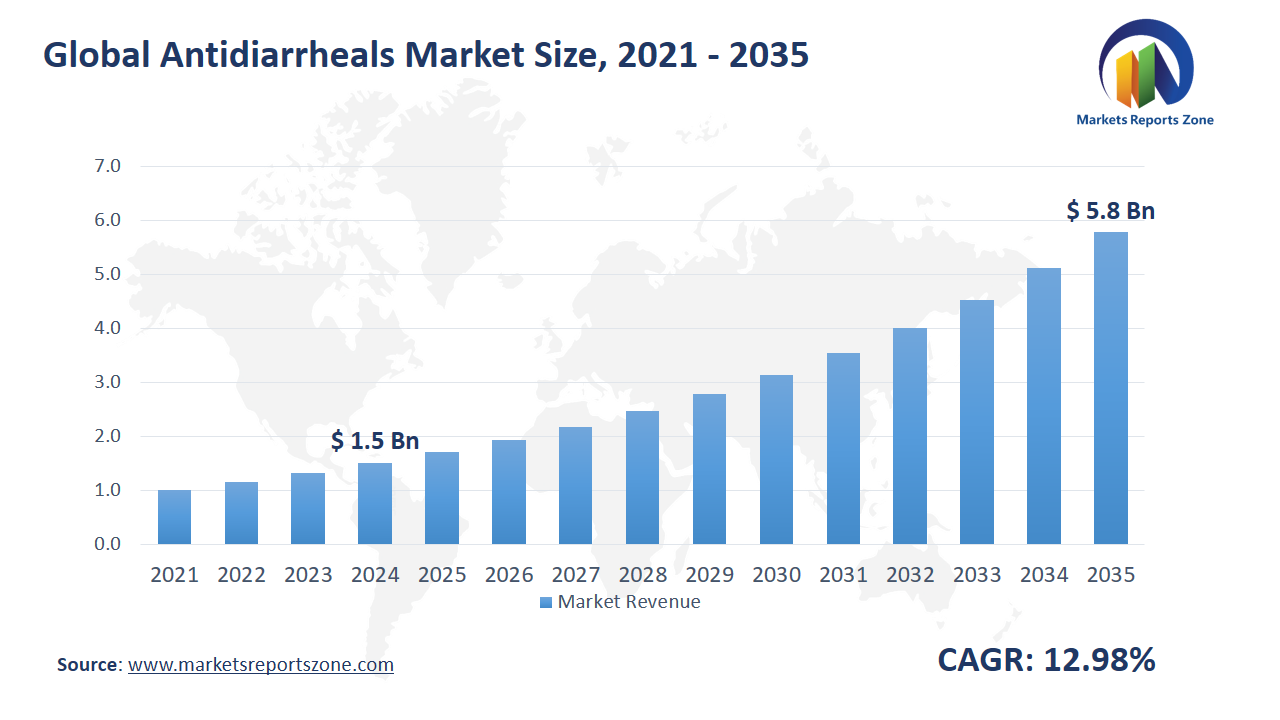
Global Antidiarrheals Market Size is expected to reach USD 5.79 Billion by 2035 from USD 1.51 Billion in 2024, with a CAGR of around 12.98% between 2024 and 2035. The global antidiarrheals market is being driven by rising cases of digestive disorders and increased travel-related infections. Urban lifestyles and poor food habits have been blamed for frequent stomach issues. In many cities, fast food consumption has been linked to loose motions and dehydration. Growing awareness about hygiene and early treatment has also helped the market. However, limited access to medication in rural areas has been seen as a major restraint. In remote regions, patients are often untreated or rely on home remedies. Despite this, two key opportunities have been observed. First, the development of pediatric formulations has gained attention. Child-friendly syrups and chewable tablets are being widely used by parents for quick relief. Second, e-pharmacy growth has made medicines more reachable. Over-the-counter antidiarrheal drugs are being delivered to doorsteps, especially in metro areas. Real-life examples include travelers in Southeast Asia often carrying loperamide during trips to avoid disruptions. School students in polluted urban zones have frequently needed quick treatment after eating outside. In flood-affected areas, waterborne infections have triggered bulk purchases of oral rehydration salts. With increased focus on healthcare, better packaging, and faster relief options, the antidiarrheals market is expected to stay in demand across both developed and developing nations. Melatonin, 5-HTP and Serotonin are also studied in gut health, as gut-derived serotonin influences motility and diarrhea, linking neurochemistry to antidiarrheal research.
Driver: Unhealthy Lifestyles Fuel Stomach Troubles
Rising digestive disorders caused by poor food habits have become a major driver of the antidiarrheals market. Processed foods, irregular eating schedules, and low water intake have been widely blamed for triggering stomach issues. In many households, oily and spicy meals are consumed frequently, leading to indigestion and loose stools. Busy professionals often skip homemade food and rely on roadside snacks or instant meals, which are not always hygienically prepared. Children and teenagers are also seen consuming excessive soft drinks and junk food, which weakens the gut over time. As a result, antidiarrheal medicines are being kept in homes as a precaution. In urban areas, people working night shifts often face gastric imbalance and seek quick-relief tablets. Real-life cases include office workers falling sick after back-to-back meals from food delivery apps and students missing school due to stomach upsets caused by contaminated snacks. In some middle-class neighborhoods, small clinics have reported regular patients with digestion-related problems. Even during festivals or weddings, heavy eating has led to a surge in demand for digestive medicines. With lifestyle changes becoming harder to avoid, the use of antidiarrheals is being normalized as part of everyday health management in both adults and children.
Key Insights:
- In 2023, over-the-counter antidiarrheal sales in the United States reached approximately 55 million units.
- Diarrhea remains the second leading cause of death among children under 5 globally, resulting in about 760,000 deaths each year.
- In September 2021, AzurRx BioPharma invested $229 million to acquire First Wave Bio, expanding its antidiarrheal treatment portfolio.
- Generic antidiarrheal drugs account for more than half of the retail sales volume in the U.S. market.
- Hospital and retail pharmacies together dispense over 80% of antidiarrheal prescriptions in the United States.
- In India, the prevalence of diarrhea among children under five was reported at 9.2% in recent national health surveys.
- The adoption rate of oral rehydration solutions, a key antidiarrheal therapy, exceeds 60% in public health programs in several developing countries.
- Lupin Limited launched a generic version of nitazoxanide tablets for diarrhea management in the U.S., expanding access to antidiarrheal treatments.
Segment Analysis:
The antidiarrheals market is segmented by type into prescription and OTC drugs, and by application into children and adults, each showing unique trends. Prescription drugs are being used for severe or chronic conditions, especially in hospital settings where patients suffer from infections or side effects of antibiotics. These are often given after stool tests and doctor evaluations. In contrast, OTC drugs are being widely purchased for quick relief from common diarrhea caused by food poisoning or mild infections. These are easily available in pharmacies and are often kept in household medicine kits. Among applications, adults form the larger user base due to frequent exposure to outside food, alcohol, and stress-related digestion issues. Working professionals, especially those in travel and sales jobs, are using OTC tablets during long commutes or outstation visits. On the other hand, children are more likely to be given flavored syrups or dissolvable powders for gentle relief. In daycare centers and schools, caregivers are often advised to keep rehydration solutions handy during summer months. For instance, parents of toddlers are regularly consulting pediatricians after episodes of loose motion caused by sudden weather changes or teething. Across all segments, convenience, safety, and speed of relief are guiding consumer choices in the market.
Regional Analysis:
The antidiarrheals market shows different trends across regions due to variations in climate, hygiene, healthcare access, and lifestyle. In North America, high awareness and quick access to OTC drugs have made self-treatment common. Families often stock antidiarrheal pills at home, especially during road trips or camping holidays. In Europe, stricter food regulations help reduce cases, but seasonal stomach bugs still lead to regular use in schools and nursing homes. In countries like Italy and Spain, pharmacists play a key role in recommending suitable treatments. Asia-Pacific experiences a higher burden due to tropical climate, street food culture, and large rural populations. In places like Indonesia and India, monsoon seasons cause a spike in waterborne illnesses, increasing the demand for oral rehydration salts and tablets. Latin America sees steady market growth as healthcare efforts expand. In countries like Peru, mobile clinics are distributing digestive medicines in mountainous areas affected by poor sanitation. The Middle East and Africa region faces infrastructural challenges, but awareness is slowly rising. In parts of Kenya and Egypt, NGOs and health workers are promoting basic hygiene and distributing antidiarrheal kits in refugee camps and low-income zones. Across all regions, real-world health risks and environmental factors continue to shape the use and availability of antidiarrheal solutions.
Competitive Scenario:
Leading pharmaceutical companies in the antidiarrheals market have been actively expanding their portfolios and enhancing treatment options. Lupin has introduced Acotiamide tablets in India, targeting functional dyspepsia, a common digestive disorder. Additionally, they have launched Nitazoxanide tablets in the U.S., providing treatment for diarrhea caused by specific parasites. To strengthen their gastroenterology offerings, Lupin has also acquired five legacy brands from Menarini, including Piclin and Sucramal O. Glenmark Pharmaceuticals has received U.S. FDA approval for Crofelemer, an antidiarrheal medication used to relieve symptoms in HIV/AIDS patients undergoing antiretroviral therapy. GSK continues to focus on its gastrointestinal portfolio, ensuring the availability of essential medications. Perrigo has been expanding its range of over-the-counter antidiarrheal products, catering to the increasing demand for accessible treatments. Pfizer remains committed to research and development in the gastrointestinal segment, aiming to introduce innovative therapies. These strategic initiatives by key players are enhancing the availability and effectiveness of antidiarrheal treatments globally, addressing both acute and chronic gastrointestinal conditions.
Antidiarrheals Market Report Scope
| Report Attribute | Details |
|---|---|
| Market Size Value in 2024 | USD 1.51 Billion |
| Revenue Forecast in 2035 | USD 5.79 Billion |
| Growth Rate | CAGR of 12.98% from 2025 to 2035 |
| Historic Period | 2021 - 2024 |
| Forecasted Period | 2025 - 2035 |
| Report Coverage | Revenue forecast, company ranking, competitive landscape, growth factors, and trends |
| Regions Covered | North America; Europe; Asia Pacific; Latin America; Middle East & Africa |
| Countries Covered | U.S.; Canada; Mexico, UK; Germany; France; Spain; Italy; Russia; China; Japan; India; South Korea; Australia; Southeast Asia; Brazil; Argentina; Saudi Arabia; UAE; South Africa |
| Key companies profiled | Actelion; Lupin; GSK; Glenmark Pharmaceuticals; Perrigo; Pfizer |
| Customization | Free report customization (equivalent up to 8 analysts working days) with purchase. Addition or alteration to country, regional & segment scope. |
The Global Antidiarrheals Market report is segmented as follows:
By Type,
- Prescription Drugs
- OTC Drugs
By Application,
- Children
- Adults
By Region,
- North America
- U.S.
- Canada
- Mexico
- Europe
- UK
- Germany
- France
- Spain
- Italy
- Russia
- Rest of Europe
- Asia Pacific
- China
- Japan
- India
- South Korea
- Australia
- Southeast Asia
- Rest of Asia Pacific
- Latin America
- Brazil
- Argentina
- Rest of Latin America
- Middle East & Africa
- Saudi Arabia
- UAE
- South Africa
- Rest of Middle East and Africa
Key Market Players,
- Actelion
- Lupin
- GSK
- Glenmark Pharmaceuticals
- Perrigo
- Pfizer
Frequently Asked Questions
How big is the Antidiarrheals market?
Global Antidiarrheals Market Size was valued at USD 1.51 Billion in 2024 and is projected to reach at USD 5.79 Billion in 2035.
What is the Antidiarrheals market growth?
Global Antidiarrheals Market is expected to grow at a CAGR of around 12.98% during the forecasted year.
Which region has the largest market share in Antidiarrheals market?
North America, Asia Pacific and Europe are major regions in the global Antidiarrheals Market.
Who are the key players in Antidiarrheals market?
Key players analyzed in the global Antidiarrheals Market are Actelion; Lupin; GSK; Glenmark Pharmaceuticals; Perrigo; Pfizer and so on.